Source Pneumatic System Components for Automation, Robots, and Print
Find 30 verified pneumatic system components suitable for automation, robots, and print applications. Buyers can compare models like MN-Z00294 and PUC, reviewing materials such as aluminum and brass, along with surface treatments and pressure ratings to select the right parts for their needs.
Key considerations
Products List




Comprehensive Sourcing Guide
Strategic Sourcing Guide for Pneumatic System Components
Understanding Technical Specifications and Material Composition
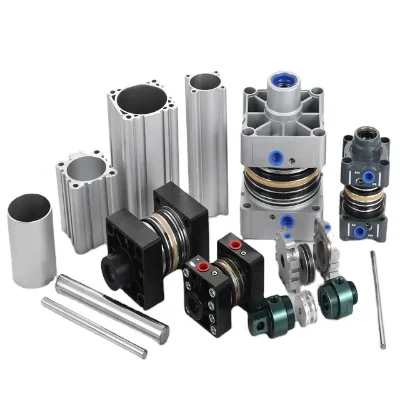
When sourcing pneumatic system components, the first critical step involves a granular analysis of technical specifications and material composition. The market offers a diverse array of products, ranging from quick connectors to complex cylinder assemblies, each defined by distinct physical and operational attributes. Buyers must recognize that material selection is not merely a preference but a determinant of component longevity and compatibility with specific industrial environments.
The observed product landscape includes components constructed from various materials, including plastic, aluminum, and brass. Plastic components are often utilized for applications where weight reduction and corrosion resistance are paramount, while aluminum and aluminum alloy variants are frequently selected for their strength-to-weight ratio and suitability for high-pressure pneumatic systems. For instance, specific cylinder models are explicitly noted as being manufactured from aluminum alloy, which suggests a focus on durability in automation and control settings. Conversely, brass components are often identified in contexts involving quick connectors, likely due to brass's excellent machinability and resistance to corrosion in air lines.
Surface treatment processes are equally vital in defining the functional integrity of these parts. The data indicates that components may undergo plating with copper or anodizing. Anodizing is a standard electrochemical process that enhances the corrosion resistance and wear resistance of aluminum parts, making it a preferred choice for components exposed to harsh industrial conditions. Copper plating, on the other hand, may be specified for specific electrical conductivity requirements or to prevent oxidation in certain connector interfaces.
Structural design also varies significantly across the product range. Buyers will encounter general cylinder structures, as well as specialized types such as double-acting cylinders with non-adjustable cushioning. The distinction between standard and non-standard configurations is critical; while some models adhere to standard specifications, others offer custom manufacturing capabilities. This flexibility allows for the creation of components tailored to unique machinery layouts, such as those found in semiconductor manufacturing or robotics.
The following table summarizes the key material and structural attributes observed in the current market to assist buyers in their initial screening process:
| Attribute Category | Observed Specifications | Typical Application Context |
|---|---|---|
| Primary Materials | Plastic, Aluminum, Aluminum Alloy, Brass | General automation, high-pressure systems, air lines |
| Surface Treatments | Plated Copper, Anodized | Corrosion resistance, wear resistance, conductivity |
| Cylinder Types | Double-acting, Non-adjustable cushioning, Pressurized | Automation, robotics, semiconductor equipment |
| Structure | General Cylinder, Quick Connector | Pneumatic systems, air transport, grinding machinery |
| Customization | Available (Custom/Non-Custom) | Tailored machinery, specific OEM requirements |
Compliance, Certification, and Standard Verification
Navigating the regulatory landscape is a fundamental aspect of B2B procurement for pneumatic components. While specific certification statuses can vary by supplier, buyers must prioritize verification of compliance with recognized international and national standards. The presence of certifications such as CE and ISO is a strong indicator of a supplier's commitment to quality and safety, though these should always be verified against current documentation rather than assumed.
In terms of standards, the market data highlights adherence to GB (Guobiao) standards, which are the national standards of China. This is particularly relevant for components originating from Chinese manufacturing hubs like Dongguan and Zhejiang. However, for global supply chains, reliance on international standards is often necessary to ensure interoperability. The data also references ISO 15552, a standard governing pneumatic cylinders, which buyers should actively seek to confirm when sourcing cylinder-based components.
Compliance checks must extend beyond the product itself to include the manufacturing process and material safety. While background information mentions certifications like RoHS and REACH, these should be treated as areas for verification rather than guaranteed attributes of every listed product. Buyers should explicitly request test reports or certificates of conformity that demonstrate the component's compliance with these environmental and safety directives. This is especially crucial for components intended for use in sensitive industries such as semiconductor manufacturing or food processing, where material safety is non-negotiable.
Furthermore, the standardization of dimensions and tolerances is essential for system integration. Observed specifications indicate tolerance levels as tight as +/- 0.01 mm, which is critical for high-precision applications. Buyers must ensure that the supplier can consistently maintain these tolerances across production batches. The distinction between "Standard Specifications" and "Customized" standards is also vital; while standard parts offer immediate availability, custom parts require a deeper understanding of the supplier's capability to meet specific dimensional and functional requirements without compromising structural integrity.
Cost Drivers and Pricing Dynamics
The pricing of pneumatic system components is influenced by a complex interplay of factors, including material costs, manufacturing complexity, customization levels, and order volume. The observed price range in the market is extensive, spanning from $0.11 to $1440. This wide variance underscores the importance of defining precise requirements before engaging in price negotiations. Low-cost items, likely falling at the lower end of the spectrum, are typically standard quick connectors or simple plastic components with minimal processing. In contrast, higher-priced items often involve complex cylinder assemblies, precision-machined aluminum or brass parts, and specialized surface treatments like anodizing.
Material selection is a primary cost driver. Components made from aluminum alloy or brass generally command higher prices than those made from plastic due to the raw material costs and the energy-intensive nature of their processing. Additionally, the application of surface treatments adds to the overall cost. Anodizing and copper plating require additional chemical and energy resources, which are reflected in the final unit price.
Customization represents another significant variable. Products labeled as "Customized" or "OEM Custom: Yes" often incur higher unit costs due to the setup time, tooling expenses, and lower economies of scale associated with bespoke manufacturing. However, for buyers requiring specific dimensions or unique functional attributes, this cost is often necessary to ensure system compatibility. Conversely, "Non-Customized" or standard specification items benefit from mass production efficiencies, resulting in lower per-unit costs.
Order volume plays a pivotal role in cost optimization. The observed Minimum Order Quantity (MOQ) ranges from 1 to 2000 units. Buyers purchasing small quantities may face higher per-unit costs, while those capable of meeting higher MOQ thresholds can often negotiate more favorable pricing structures. It is essential for procurement teams to balance the need for inventory flexibility with the potential cost savings associated with bulk purchasing.
Typical Applications and Operational Environments
Pneumatic system components are ubiquitous across a wide spectrum of industrial sectors, each imposing unique operational demands. The observed usage data highlights applications in printing, semiconductor manufacturing, automation and control, and robotics. These industries require components that can withstand high cycles, precise movements, and potentially harsh environmental conditions.
In the semiconductor and robotics sectors, precision is paramount. Components used in these fields often require tight tolerances and high reliability. The data indicates that specific cylinder models are designed for these applications, suggesting a need for robust performance in automated assembly lines. Similarly, the printing industry relies on pneumatic systems for precise control of mechanical movements, necessitating components that offer consistent pressure and rapid response times.
Beyond heavy industry, pneumatic components are essential in general machinery such as air compressors, grinding machines, and air drills. These applications often involve high-pressure environments and continuous operation. The observed pressure range of 0 to 1.0 MPa and vacuum pressures down to -100 kPa indicate that components must be capable of handling both positive and negative pressure scenarios. This versatility is crucial for applications involving air transport screwdrivers and impact wrenches, where the system must maintain stability under varying load conditions.
Temperature tolerance is another critical factor for operational environments. The observed operating temperature range of -10°C to 60°C suggests that components are designed for normal industrial temperatures. However, buyers must verify if their specific application involves extreme temperatures that fall outside this range, as this could impact the performance of seals and other internal components. The "Normal Temperature" classification implies that for standard applications, these components are suitable, but extreme environments may require specialized materials or designs.
Supplier Evaluation and Geographic Considerations
Evaluating suppliers requires a holistic approach that considers geographic origin, production capabilities, and logistical reliability. The data indicates that a significant portion of the supply originates from China, with specific manufacturing hubs identified in Dongguan and Zhejiang. These regions are known for their robust manufacturing ecosystems and expertise in producing precision mechanical components.
When evaluating suppliers from these regions, buyers should focus on their ability to meet international standards and their track record in delivering consistent quality. The presence of certifications like CE and ISO is a positive indicator, but it should be complemented by a review of the supplier's quality control processes. Buyers should inquire about the supplier's capacity to handle both standard and customized orders, as this flexibility is often a sign of a mature manufacturing operation.
Logistical considerations are also critical. The observed MOQ ranges and packing specifications, such as "Plastic Bag+Small Box+Big Cardboard Box" or "Individually Packed," provide insight into the supplier's packaging capabilities. Proper packaging is essential to prevent damage during transit, especially for precision components with tight tolerances. Buyers should ensure that the supplier's packaging methods align with the fragility of the components and the distance of the shipment.
Furthermore, the distinction between "Standard" and "Customized" suppliers is important. Some suppliers may specialize in high-volume standard production, while others may focus on low-volume, high-mix custom manufacturing. Understanding a supplier's core competency helps buyers align their procurement strategy with the supplier's strengths. For instance, a buyer requiring rapid prototyping and customization should prioritize suppliers with demonstrated OEM capabilities, while a buyer seeking bulk standard parts should focus on high-volume manufacturers.
Quality Control and Long-Term Procurement Strategies
Ensuring the long-term reliability of pneumatic components requires a robust quality control framework. Buyers must establish clear acceptance criteria that go beyond basic visual inspection. This includes verifying dimensional accuracy, surface finish, and material integrity. The observed tolerance of +/- 0.01 mm serves as a benchmark for precision, but buyers should also consider the statistical process control (SPC) methods employed by the supplier to maintain consistency over time.
Long-term procurement strategies should focus on building partnerships with suppliers who demonstrate a commitment to continuous improvement. This includes regular audits of the supplier's quality management systems and a review of their defect rates. For critical applications, such as those in the semiconductor industry, buyers may require suppliers to provide detailed test results and performance data to validate component reliability.
Sustainability and supply chain resilience are also becoming increasingly important. Buyers should evaluate the supplier's ability to maintain production during supply chain disruptions and their commitment to environmental standards. While specific certifications like RoHS and REACH are mentioned in the background, buyers should verify that the supplier's materials and processes align with their own sustainability goals.
Finally, the procurement process should include a clear mechanism for handling non-conforming products. This involves defining return policies, replacement procedures, and communication channels for resolving quality issues. By establishing these protocols upfront, buyers can minimize downtime and ensure that their pneumatic systems operate efficiently over the long term. The combination of rigorous quality control, strategic supplier selection, and clear contractual agreements forms the foundation of a successful procurement strategy for pneumatic system components.
FAQs
What materials are used for pneumatic system components?
Components are made from plastic, aluminum, aluminum alloy, and brass. Plastic offers weight reduction, while aluminum alloy provides strength for automation, and brass is common for quick connectors in air lines.
Which surface treatments are available for these parts?
Available treatments include plated copper and anodizing. Anodizing enhances corrosion resistance for aluminum parts, while copper plating is used for specific conductivity or oxidation prevention in connector interfaces.
Can these components be customized for specific needs?
Yes, customization is available for many models, including standard and non-standard configurations. Buyers can request OEM customizations, though some items remain non-customized standard specifications.
What certifications do these pneumatic components hold?
Some products carry CE and ISO certifications. Buyers should verify specific compliance documents for standards like GB or ISO 15552, as not every listed product guarantees all certifications without explicit confirmation.
How do prices vary for pneumatic system components?
Prices range from 0.11 to 1440 USD depending on material and complexity. Simple plastic connectors cost less, while precision aluminum cylinders with custom treatments command higher prices.
What is the minimum order quantity for these items?
The minimum order quantity ranges from 1 to 2000 units. Lower MOQs allow for small sample orders, while higher volumes often secure better pricing structures for bulk procurement.
Where are these pneumatic components manufactured?
Products originate from China, specifically from hubs like Dongguan and Zhejiang. These regions are known for robust manufacturing ecosystems capable of producing precision mechanical components.